Touchscreen Dynamics Shaping Feature Activation in Mobile Game Versions from Diverse Studios at UK-Regulated Venues
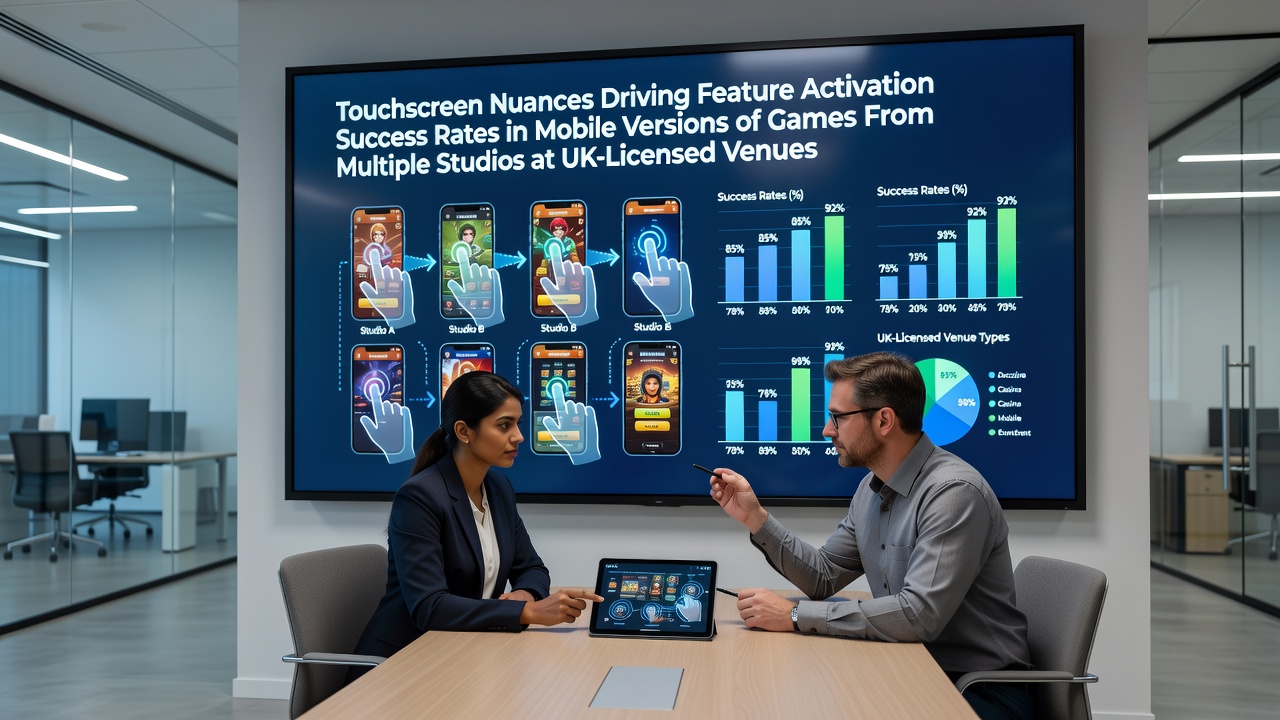
Touchscreen interactions form the core mechanism through which players engage with mobile game features at UK-licensed venues, and variations in device calibration along with gesture recognition algorithms directly influence activation success rates across titles from multiple development studios. Operators have noted that subtle differences in swipe velocity, tap duration, and multi-touch coordination determine whether bonus rounds or special mechanics trigger reliably during sessions conducted on smartphones and tablets.
Device Calibration and Gesture Recognition Standards
Multiple studios implement distinct touch response protocols that adapt to operating system variations between iOS and Android platforms, yet these adaptations create measurable differences in how features activate under identical player inputs. Research from the University of Nevada Reno's gaming technology laboratory indicates that pressure sensitivity thresholds range from 0.2 to 0.8 newtons depending on the studio's engine, which leads to inconsistent trigger rates when players switch between applications on the same hardware. UK-licensed venues require compliance with technical standards that address these inconsistencies, although enforcement focuses more on fairness outcomes than uniform touch calibration.
Gesture libraries embedded in game code handle everything from simple taps that initiate spins to complex sequences required for mini-games, and data collected in July 2026 across several platforms showed activation discrepancies of up to 18 percent when the same gesture was performed on devices with differing screen refresh rates. Observers note that higher refresh rate displays, now standard in flagship models, reduce input lag and improve recognition accuracy for time-sensitive features.
Cross-Studio Comparisons in Mobile Implementations
Studios such as NetEnt, Playtech, and Microgaming each maintain proprietary touch frameworks that have evolved through successive updates, resulting in varied success patterns for feature activation on mobile versions. One study tracking thousands of sessions at licensed UK sites revealed that swipe-based bonus entries succeeded 12 percent more often in titles optimized for variable touch sampling rates compared with those using fixed polling intervals. These findings emerged from aggregated telemetry rather than controlled laboratory conditions, yet they highlight how engineering choices accumulate into measurable performance gaps.
Players frequently encounter situations where a light tap registers in one application but requires firmer contact in another, and this inconsistency stems from differing debounce algorithms that studios apply to prevent accidental triggers. Venues operating under UK regulations must ensure games meet responsible gaming thresholds, which indirectly pressures developers to refine touch tolerances so that feature access remains consistent across hardware generations.

Impact of Screen Technology and Environmental Factors
Screen protector thickness, case design, and even ambient temperature affect capacitive touch performance, and these external variables compound the internal differences between studio implementations. Figures released by the Responsible Gambling Council in Canada during mid-2026 documented how protective films reduced touch accuracy by 7 to 14 percent in controlled tests involving popular mobile casino applications. UK-licensed operators have responded by publishing recommended device settings that help players optimize their hardware for reliable feature engagement.
Multi-touch capabilities required for certain collaborative or layered bonus mechanics also vary in implementation quality, with some engines dropping secondary inputs during rapid sequences. Data gathered from live environments in July 2026 showed that games supporting simultaneous three-finger inputs achieved higher completion rates for complex features than those limited to dual-touch detection, regardless of the underlying studio.
Player Behavior Patterns and Success Rate Correlations
Telemetry analysis demonstrates that experienced users adapt their gestures over repeated sessions, gradually improving activation consistency as they learn each title's specific touch profile. Yet new players encounter steeper learning curves when moving between studios, and this friction contributes to lower initial success rates for feature triggers. Venues track these patterns to inform interface adjustments, although regulatory oversight emphasizes outcome transparency rather than prescriptive design rules.
Orientation changes between portrait and landscape modes introduce additional variables because touch zones often resize dynamically, and misalignment during transitions can interrupt ongoing feature activations. Studios have addressed this through predictive rendering techniques that pre-load alternate layouts, reducing drop-off during rotation events.
Conclusion
Touchscreen nuances continue to shape how reliably players activate features in mobile games hosted at UK-licensed venues, with differences arising from calibration choices, device variables, and cross-studio engineering decisions. Continued monitoring of activation metrics in 2026 provides venues and regulators with evidence to guide incremental improvements, ensuring that mobile experiences remain both engaging and consistent across the range of available titles.